Monday, March 30, 2009

Traveling in time to chpt 3;chpt 10 prompt #7


After reading chapter three I said that I thought that the whole story would just continue to be a bunch of random stories all put together jumping around from one time to another. This was exactly what happened but it became a little easier to follow along because there were some patterns in Billy's time travel. Most of the book centered around the war and his trip to the planets with the aliens.
I also said in my previous post that the story seemed like a puzzle that had to be put together which it very much was.
Now that I am through with the book I think I understood and grasped most of the concepts that Kurt Vonnegut was trying to get across. I feel as though maybe even reading the book again would give me an even better understanding as to the themes and ideas he put into it.
Here is a link I found just summarizing Slaughterhouse-five and giving a little background information and insight that I found interesting after just finishing the book myself

Sunday, March 29, 2009

Did you know?; chpt 9 prompt #5

This entire book has many moments that are moving but this chapter in particular was the most emotional for me. One of the characters goes on to recall many other bombings such as Hiroshima and the number of people who died from them. I thought this was interesting and moving because less people died from the atomic bomb in Hiroshima then did from the firebombing of Dresden, yet many people don't know this. "The thing was though, there was almost nothing in the twenty-seven volumes about the Dresden raid, even though it had been such a howling success. The extent of the success had been kept a secret for many years after the war--a secret from the American people." This was emotional because in the book we can see how greatly this effected Billy and how messed up he became after it and yet millions of people had no idea of the extent of the damage that was done or even that the firebombing occurred.

Friday, March 27, 2009

Billy Pilgrim; chpt 8 prompt #3


Chapter 8 incorporated many aspects of the book and helps sum up some loose ends. By doing so it delves into the adaptation of Billy over the years and some of the reasons he is the person he is. Vonnegut finally is compelled to explain what turned Billy from a depressed soldier into an institutionalized and unstable optometrist. Billy's daughter, Barbara, believes all Billy's talk of aliens and so forth are nonsense , as would anyone, and claims these ideas are because of Kilgore Trout who is an author who wrote many books using science-fiction persuasion. And Barbara is convinced Billy's psychotic transformation started with him. Please also remember all the talk of aliens and time travel is assumed to be real in the context of the book by Billy, however, other readers and I still contain some skeptism regarding whether these things are real or are purely figments of Billy's imagination and the result of a subsequent sleeping disorder. However, it is also after Billy witnesses the Dresden firebombing and 'time travels' to a future event that he his greatly effected and his mindset begins to be altered. I believe this is due to the events he witnessed as a soldier and a survivor of a bombing considered by many worse than that of Hiroshima. Through this change in Billy, Vonnegut is once again illustrating the effect of war on the mind. He is saying war not only affects people as it goes on but long after and quite often for an entire lifetime, that war is a completely horrific part of mankind.

Thursday, March 26, 2009

Peace Not War; chpt 7 prompt #8

It has become pretty clear to me now what the major theme and message of the book is how irrational war is. Through his conversations with the aliens and his very random states of mind. By down playing the facts and horrific details of the war and the bombing of Dresden with such strange experiences with aliens and then random other stories from his childhood and his life as an optometrist it shows how irrational and unnecessary war really is.
When I first picked up the book I had heard many things about how this is one of the greatest anti-war books of its time, but until now I didn't really understand how. Just by the fact of how Billy ended up in a mental institution and thought that he could travel in time is an indication of what war can do to a person. Although it was extremely obvious how the main character was affected, the book did not go into detail about the specifics of what made him the way he was. This is a key part to how he actually feels about war in general.

Tuesday, March 24, 2009

What's in a title?; chpt 6 prompt #18


As you already know the title of the book I am reading is Slaughterhouse-five. On page 152 of chapter 6 we find out why. "The Americans were taken to the fifth building inside the gate. It was a one-story cement-block cube with sliding doors in front and back. It had been built as a shelter for pigs about to be butchered. Now it was going to serve as a home away from home for one hundred American prisoners of war." "There was a big number over the door of the building. The number was five. Before the Americans could go inside, their only English-speaking guard told them to memorize their simple address, in case they got lost in the big city. Their address was this: "Schlachthof-funf."
This is obviously the reason for the title of the book. The main character Billy was housed in this slaughterhouse for the majority of his time in Dresden along with when the actual bombing of Dresden occured. If I were to choose a title I would have chosen the same thing because the main plot to the story is how the bombings affected Billy and how he was going to write a book about it. What better title than the place in which he was when he experienced this awful massacre of people-Slaughterhouse-Five.

Friday, March 20, 2009

Some dislikes; chpt 5 prompt #1


Prior to reading this book I tried to get some reviews to find out if I would enjoy it or not. The most common reaction was that you either love it or you hate it and that it is somewhat confusing the first time you read it. Being half way through the book prompted me to stop and think about how I feel about the story thus far.

This chapter placed great emphasis on Billy's experience with the Tralfamadorians. Throughout the story there have been a few small experiences with the aliens but nothing too significant. I don't particularly like the sections that take place on Tralfamadore. I find them somewhat confusing and irrelevant to the story. I think if I were to read the story over again, it may make sense as to the message Billy is tryin to get across through these experiences with the aliens. If I were his daughter I would have him admitted to the mental hospital as well, with all that talk about aliens.

However, if I were to take a guess at what the meaning behind the space travel, I think there might be quite a lot to it. For one, it shows how emotionally damaging war can be and how it can actually make people go insane, the experiences from war never go away. Also I think Billy could be trying to tell the reader something about the human race. The aliens see humans and their way of life so differently that there must be some reason for it all.

Tuesday, March 17, 2009

Words of Wisdom; chpt 4 promt #14


"I am a Tralfamadorian, seeing all time as you might see a stretch of the Rocky Mountains. All time is all time. It does not change. It does not lend itself to warnings or explanations. It simply
is . Take it moment by moment, and you will find that we are all, as I've said before, bugs in amber." (pg 85-85)
I found this to be a significant quote for several reasons. First of all, I'm not quite sure who the Tralfamadorians are but I think as the story continues I'll be able to figure out who these alien creatures are and what purpose they serve in the book. But I found this quote to be important also because the way they see time is gives us some insight into a theme Vonnegut is trying to get across. I think this way of viewing life will becoming important to Billy Pilgrim and significant to the way he looks at war and how he is trying to make his point to the reader.

Monday, March 16, 2009

Past, Present, Future; chpt 3 prompt #6


I think as the book continues, there will be more stories about the war and Billy's experiences in Germany. He will constantly go back and forth between the present and the past. He frequently closes his eyes and goes back in time to recall certain experiences. "Somewhere in there was Christmas. Billy Pilgrim nestled like a spoon with the hobo on Christmas night, and he fell asleep, ad he traveled in time t 1967 again--to the night he was kidnapped by a flying saucer from Tralfamadore. " (pg 71) This continues to happen and I think it will persist throughout the entire story and through this he tells about what happened and what is happening in his life. It is almost like a puzzle that the reader as to put together as the book goes along. I'm interested to see what happens next with him and Roland Weary as their train arrives.

I found this article discussing how this form of writing is used and i thought it is interesting to have a little insight as to how it is used and why.

Thursday, March 12, 2009

So it goes?; chpt 2 Prompt #2


There are several parts about this chapter that puzzled and confused me. The author tells a story about the main character Billy Pilgrim but it is short and not very detailed. Some of them are even hard to believe. At the end of almost all of his recounted stories he writes "So it goes." This makes me think maybe that didn't really happen and is just made up. For example, on pages 36-37 he recalls a story about torture and then says So it goes.
What made me think about this even more is the fact that in the first chapter which was sort of like an introduction, the author said "All this happened, more or less." Then goes on to explain how pretty much everything is true except for the names of people.

Thesis

While in his younger years Ernesto 'Che' Guevara was determined to make the world a better place, he soon lost sight of himself and never accomplished the positive impact he originally intended.

Wednesday, March 11, 2009

Do Now


After reading the section on Peru, which cities and towns do you think had the greatest impact on Che and how do you see him changing from these different experiences?

Tuesday, March 10, 2009

Style and so on; chpt 1 prompt #11


From the very first sentence of the book I noticed that the author has a very unique style of writing. His style is definitely not difficult to read, but I can see it being hard to follow. This first chapter was more like an introduction to what the rest of the story is going to be about and almost a sort of explanation. In the 22 pages of this first chapter the character recounted numerous events with only a sentence or so of description.

I feel as though his brief stories of little detail and seemingly little importance will actually have a much deeper meaning than it comes off, that the short choppy sentences are making a statement about how he felt about the people and places he encountered. Also, I think this change of style will most likely add to my enjoyment of hte book especially becuase it is very much the opposite of The Motorcycle Diaries where Che feels the need to go so incridibly in depth about the most insignificant of events which I find exhausting to read at times, so a change of pace will be refreshing.

Independent Reading Book!


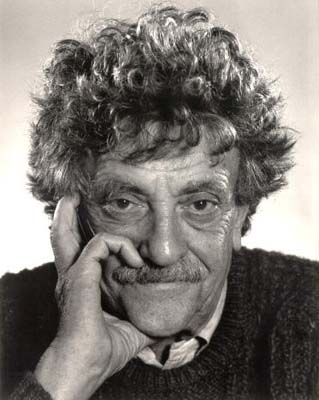
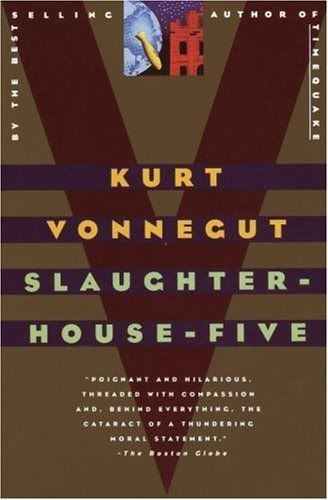
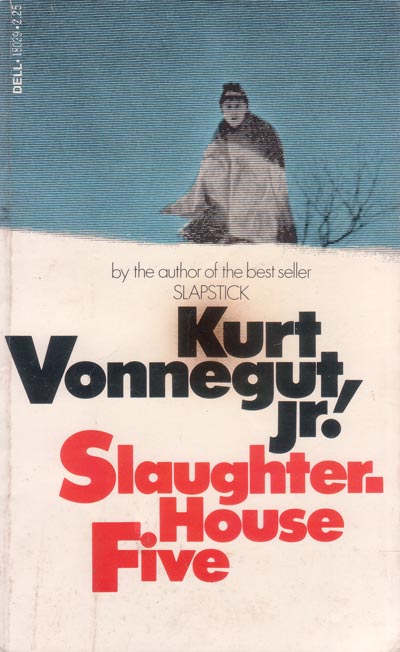
Slaughterhouse-Five by Kurt Vonnegut centers on the infamous firebombing of Dresden and Billy Pilgrim's experience through it. Throughout the next few weeks as I am reading, there will be posts about the book. Since there are 10 chapters and 10 prompts it works out quite nicely. Tere should be a new post almost everyday if not every other. They will be mixed in with Do Nows and other entries, so keep an eye out for them!

Monday, March 9, 2009

Good Intentions Go Unrecognized


If Che were to answer the questions 'Who do I want to become?' and 'What impact do I want to have on the world around me?' he would have a lot to say. I think he wanted to become someone who made a difference and someone that many people would remember. I think it was very important to him to help others. Even though the way he did this changed throughout his life, for example first he wanted to become a doctor and it slowly progressed into leading an uprising. When he realized that simply being a doctor would not accomplish the huge goals he had in mind he had to take a more political approach. I think that Che wanted to become the person to bring social and economic equality to the world in an ideal fashion, yet he ended up having an overall negative impact on society due to some of his brutal actions while he was in Cuba.
Above I included a link to a timeline we made about Che's life and I think that is extremely helpful in showing how throughout the years his goals and actions drastically changed. Below I also included a video of how Che is viewed by most people today. It fails to explain and portray the years of his youth, I believe he always wanted to do what was best for everyone but his approach now comes off as negative to most.

Thursday, March 5, 2009

Chile in Six Words


Augusto Pinochet highly disliked among Chileans.